

By Mthokozisi Mthethwa
June marks both Men’s Health Month (MHM) and International Men’s Health Week (IMHW). Nationally and Internationally recognised awareness periods focused on improving the health and wellbeing of men and boys through education, prevention, early detection, advocacy and community engagement. Men’s Health Month also aims to raise awareness of preventable health conditions and encourage the early detection and treatment of diseases that disproportionately affect men.
While these awareness campaigns encourage people to prioritise their health, access to healthcare remains a challenge for many communities. Good health extends beyond preventing and treating illness; it also depends on whether people can access medical services when they need them.
Additionally access to healthcare is closely linked to both physical and mental wellbeing, the uncertainty of not knowing where or how quickly medical assistance can be obtained can place an added emotional burden on individuals and families. When healthcare services are accessible and reliable, they provide peace of mind, improve quality of life, and help build stronger, healthier communities.
For residents of Komati, access to healthcare remains an ongoing concern. The community is at the centre of South Africa’s just energy transition as the country moves away from coal towards cleaner energy sources. While much attention has been given to creating new economic opportunities and supporting workers during this transition, a truly just energy transition should also include investment in essential public services that improve people’s quality of life, including healthcare.
Without reliable access to healthcare, the uncertainty surrounding illness and medical emergencies can affect not only people’s physical health but also their mental wellbeing.
A community still waiting for a permanent clinic
The absence of a permanent clinic in Komati has been one of the recurring concerns raised by community members during public meetings and community engagements. Residents have repeatedly highlighted the challenges of relying on a mobile clinic that visits the area only once a week, especially when medical needs arise outside its operating schedule.
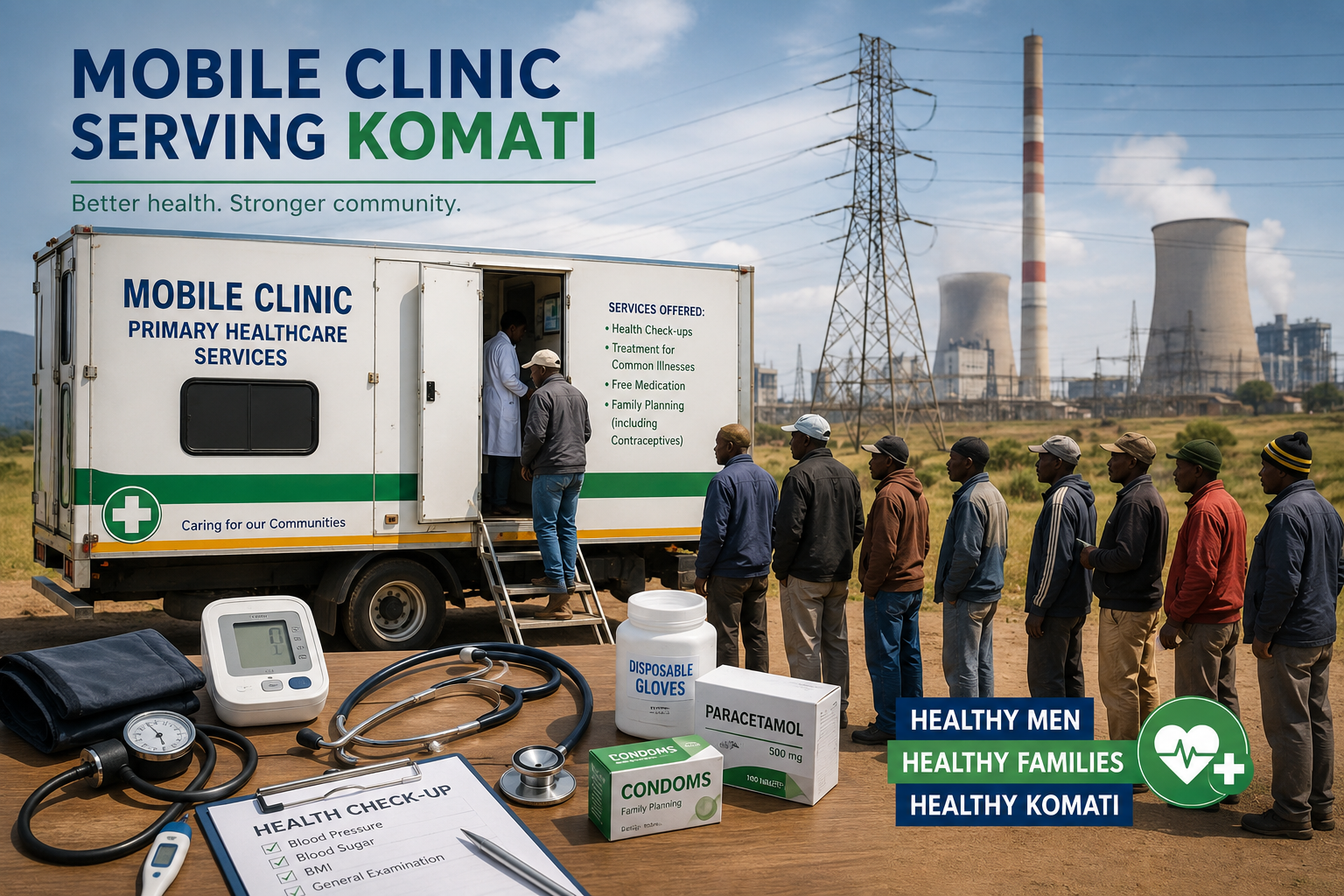
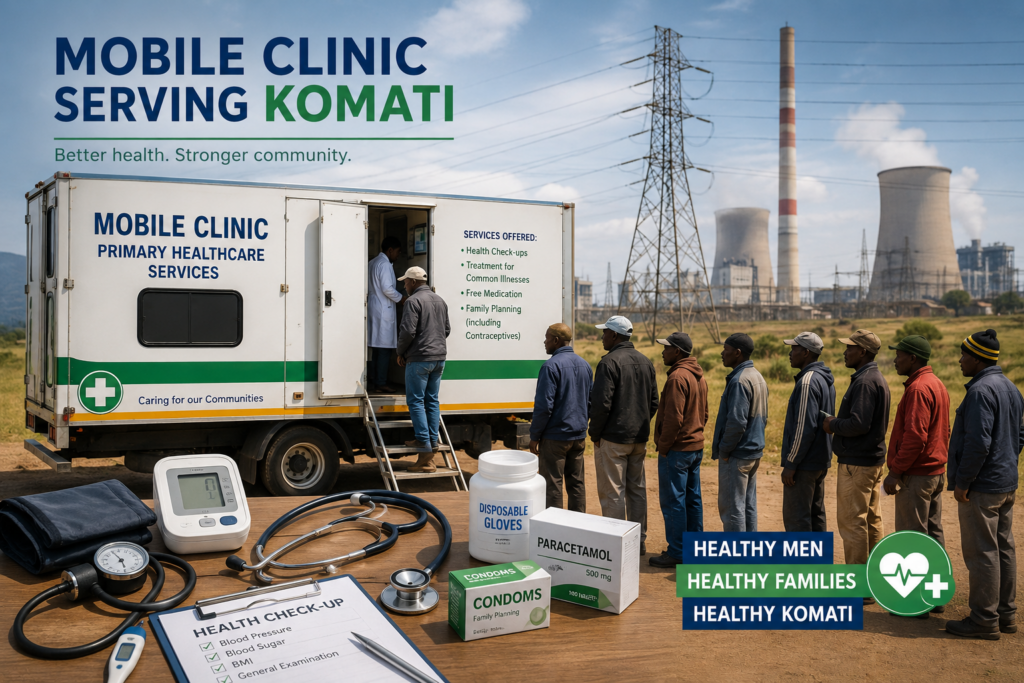
The mobile clinic, which operates under the Steve Tshwete Local Municipality’s healthcare services, forms part of efforts to bring primary healthcare closer to underserved communities. The mobile units rotate through areas including Middelburg, Hendrina and surrounding farms, offering services such as general health check-ups, treatment for common illnesses, free medication, and family planning services, including contraceptives.
While residents appreciate the service provided by the mobile clinic, many believe it is not enough to meet the healthcare needs of the Komati community.
Residents continue to wait for answers
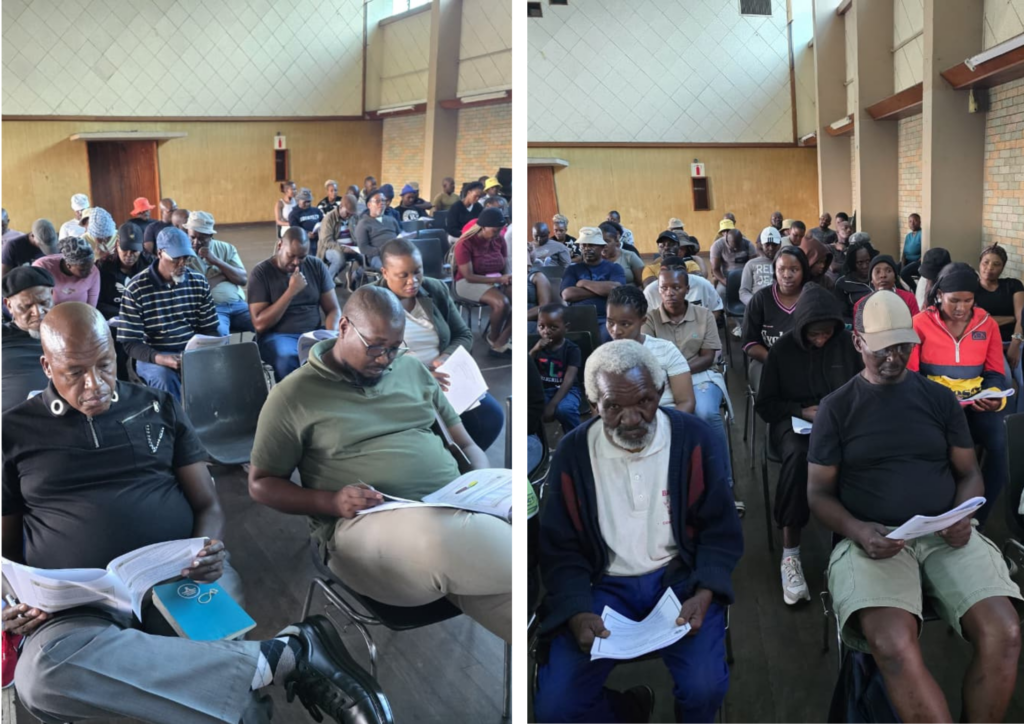
According to concerns raised during community engagements, the municipality has previously explained that Komati does not have a permanent clinic because it is regarded as a small community, with the mobile clinic visiting once a week. However, residents argue that illness does not follow a schedule and that medical emergencies can happen at any time.
During the engagement, Masilela said the municipality was engaging with relevant stakeholders and exploring partnerships between government and other sectors to improve service delivery. He further indicated that discussions around establishing a permanent clinic in Komati were underway. However, no clear timeline was provided for when the facility would be built or become operational.
For many residents, that uncertainty remains a concern, particularly when medical emergencies occur on days when the mobile clinic is unavailable.
When urgent medical attention is needed, residents often have to travel to healthcare facilities such as Impungwe Hospital, approximately 32 kilometres from Komati. This can be especially challenging for people without private transport, particularly when ambulance response times are delayed.
The matter was raised again during the community imbizo held in January this year, where Steve Tshwete Local Municipality Executive Mayor, Councillor Mhlonishwa Petros Masilela, acknowledged residents’ concerns regarding the lack of a permanent clinic.
Nomfundo Mhlongo, a Komati resident who relies on the mobile clinic for her healthcare needs, says the service has been valuable.
“I am unemployed and I do not have medical aid. The clinic has helped me a lot because I receive free treatment and medication,” she says. However, she recalls a time when she became seriously ill and the absence of a permanent clinic became a major challenge.
“There was a day when I became very sick, but the mobile clinic was not there. We called for an ambulance, but it took a long time to arrive. In the end, I asked my younger sister, who has a car, to take me to Impungwe Hospital.” She says the experience reinforced the importance of having healthcare services available within the community.
Nomfundo Mhlongo,
komati resident
“There was a day when I became very sick, but the mobile clinic was not there.”
As Men’s Health Month comes to an end, Komati’s experience serves as a reminder that promoting good health requires more than awareness campaigns. It also requires reliable access to healthcare services that people can depend on throughout the year.
A successful just energy transition should not only create economic opportunities but also strengthen essential public services that protect people’s health and wellbeing. For many residents, a permanent clinic would represent more than just a building it would provide dignity, security and the reassurance that healthcare is available whenever it is needed.
Until then, the weekly mobile clinic, while appreciated by residents, remains a temporary solution to a long-term community need.